
Potassium polyaspartate (KPA): a biodegradable urease inhibitor
KPA is a water-soluble, fully biodegradable biopolymer that mildly and steadily slows urea hydrolysis while improving root growth and nutrient uptake.
Executive summary
The core problem
Conventional urea loses nitrogen through ammonia volatilization, nitrate leaching and denitrification. Chemical urease inhibitors such as NBPT give strong short-term protection, but growers increasingly want green, biodegradable, multifunctional biopolymers that also improve root architecture and nutrient absorption.
The technical solution
Potassium polyaspartate (KPA, or PASP-K) is a water-soluble, fully biodegradable polymer derived from polyaspartic acid, rich in carboxyl (–COO⁻) and amide groups. It acts as a mild, sustained urease activity modulator and a high-efficiency nutrient synergist.
The dual-action mechanism
Unlike NBPT, which binds covalently to the nickel active site, KPA works through chelation, spatial shielding and surface adsorption. It slows initial urea hydrolysis, flattens the pH spike, and chelates trace metal ions to improve phosphorus and micronutrient uptake.
The agronomic return
Field studies show that KPA-enhanced urea (PASPU) reduces ammonia volatilization and fertilizer-N leaching, stimulates lateral roots, raises NUE and boosts yields by 2% to 10%, while remaining non-toxic and eco-friendly.
Our urease inhibitor products
Ready-to-use solutions from DeltaChem, available through Kingenta.
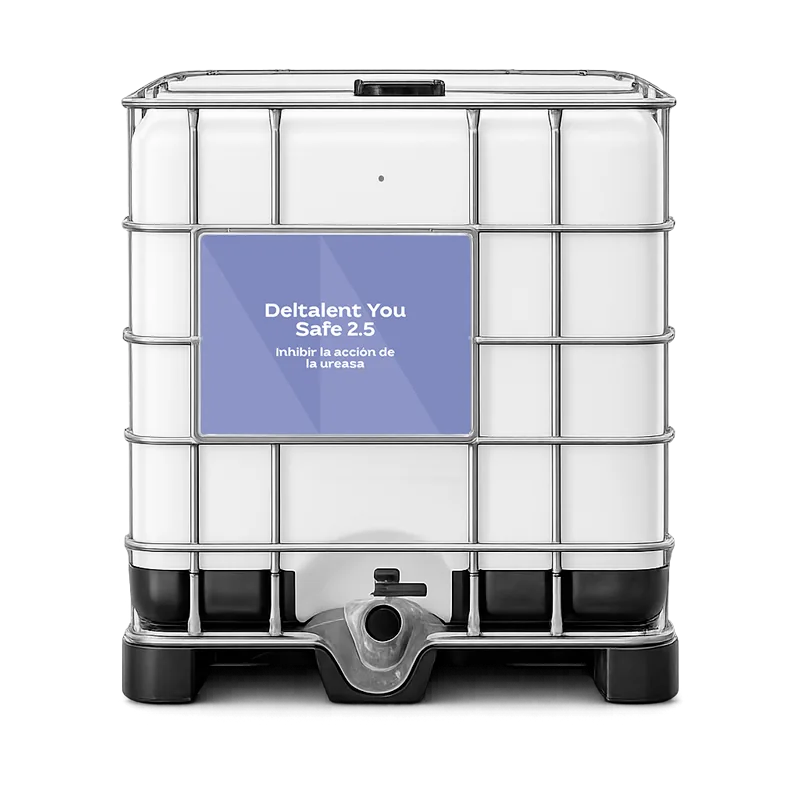 DeltaLent YoUsafe ForceUrease inhibitorReady-to-use, odorless 25% NBPT urease inhibitor, free of NMP and DMSO, for urea, UAN and urea-containing NPK blends.View product
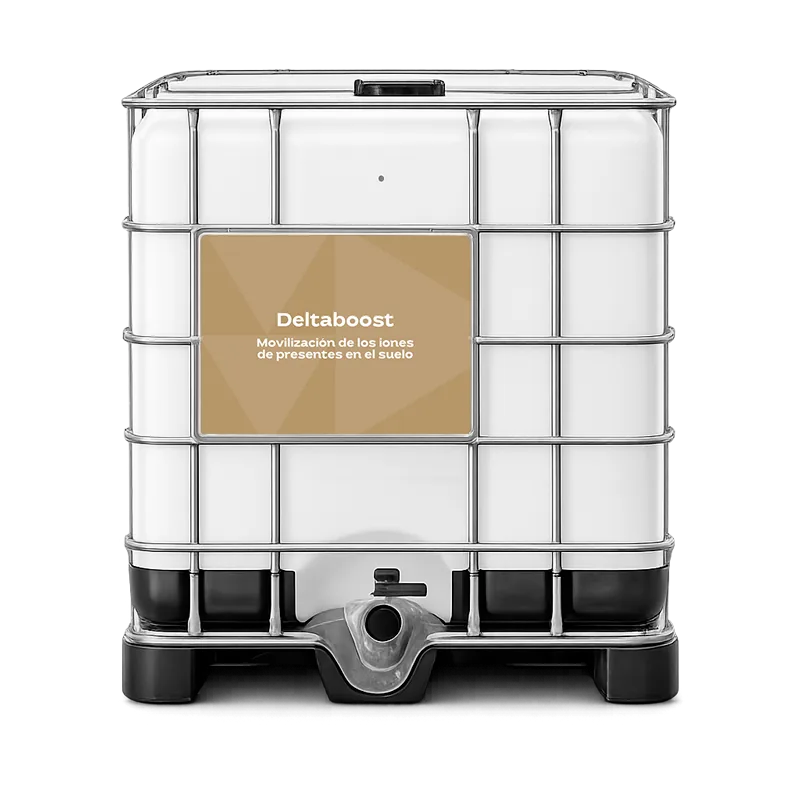 DeltaBoost Active NUrease inhibitorOrganic, biodegradable, water-based urease inhibitor (60% potassium polyaspartate) that reduces ammonia volatilization from urea fertilizers.View product
 DeltaLent Active DUONitrogen stabilizer + phosphate enhancerReady-to-use dual-action nitrogen stabilizer combining DMPP, which slows nitrification, with KPA, which helps nutrients stay available in the root zone.View product
What KPA is
The potassium salt of polyaspartic acid, built to work with soil and crop biology.
Molecular structure and functional groups
Potassium polyaspartate is the potassium salt of polyaspartic acid (PASP), a polypeptide made by ring-opening polymerization of polysuccinimide (PSI). Its backbone is repeating aspartic acid units joined by peptide bonds, which gives natural biocompatibility and full biodegradability in soil.
The chain carries many free carboxyl (–COO⁻) groups neutralized by potassium (K⁺), along with amide linkages. These groups give it high cation exchange capacity (CEC) and strong metal-chelating ability.
Beyond slowing urease, KPA acts as a soil dispersant, anti-scaling agent, root-growth stimulant and nutrient carrier.
From polysuccinimide to KPA: a biodegradable polypeptide.
How KPA modulates urea hydrolysis
KPA does not match the enzyme-blocking potency of NBPT. It regulates hydrolysis through physical and chemical routes that prevent the worst loss conditions of untreated urea.
It buffers the pH spike
When unprotected urea hydrolyzes, rapid H⁺ consumption drives the microsite pH to 8.5–9.0 and triggers heavy ammonia loss. KPA's dense carboxyl groups buffer locally and bind transient H⁺, moderating the initial breakdown so alkalinity does not spike.
It shields the enzyme
KPA's polyanionic chains adsorb onto soil colloids and interact with extracellular urease and urease-producing microbial surfaces through hydrogen bonding and electrostatic attraction, hindering the enzyme's access to urea.
It chelates metal ions
KPA chelates multivalent cations in the soil solution, stabilizing the environment around the dissolving granule and preventing premature nutrient fixation.
NBPT and KPA compared
Two different ways to protect urea nitrogen.
| Feature | NBPT | KPA (PASP-K) |
|---|---|---|
| Mode of action | Chemical inhibitor that binds covalently to the nickel (Ni²⁺) active site of urease | Biopolymer that works through chelation, spatial shielding and surface adsorption |
| Strength | High potency, targeted | Milder, broader modulation of the soil micro-environment |
| Persistence | Relatively short window of 7 to 14 days | More sustained modulation |
| Other functions | Urease inhibition | Also a soil dispersant, anti-scaling agent, root-growth stimulant and nutrient carrier |
| Environmental profile | Chemical inhibitor | Fully biodegradable |
Beyond urease inhibition: roots and nutrient synergy
The agronomic value of KPA-enhanced urea (PASPU) lies in its effect on plant physiology and soil nutrient dynamics.
Stronger roots and nitrate uptake
Polyaspartic acid derivatives remodel root architecture, promoting lateral root proliferation and root hair elongation. Upregulated nitrate and ammonium uptake genes let crops capture soil nitrogen more efficiently.
Better uptake of P, Fe, Zn and Mn
As a strong chelating agent, KPA prevents insoluble phosphate complexes from precipitating and keeps iron, zinc and manganese available in neutral to alkaline soils, so nutrients stay soluble in the rhizosphere all season.
Less leaching
15N tracer field studies confirm that KPA-enhanced urea reduces fertilizer-N leaching, holding nitrogen in the active 30–60 cm root layer instead of letting it flush below 90 cm.
Agronomic performance and yield impact
KPA-enhanced urea compared with conventional urea.
| Performance metric | Conventional urea (CU) | KPA-enhanced urea (PASPU) | Agronomic benefit |
|---|---|---|---|
| Initial hydrolysis rate | Rapid surge, high volatilization risk | Moderated and sustained | Smooths the nitrogen release curve over time |
| Ammonia volatilization and leaching | High baseline losses (30% or more) | Significantly reduced | Keeps the nitrogen pool in the root zone |
| Crop yield response | Baseline (100%) | 102.0% to 109.8% | 2.0% to about 10% higher yield, driven by higher spike or ear counts |
| Environmental profile | Standard chemical residue | 100% biodegradable and eco-friendly | No toxic residue; safe for the soil microbiome |
Product comparison
Key characteristics of the two urease inhibitors.
| YoUsafe Force 2.5 | DeltaBoost Active N | |
|---|---|---|
| Active ingredient | NBPT, 25% w/w guaranteed (26.0% typical) | Potassium polyaspartate (KPA), 60% |
| Form | Ready-to-use liquid | Water-based liquid |
| Character | Odorless, free of NMP and DMSO | Organic and biodegradable |
| Suitable for | Urea, UAN, NPK blends and other urea-containing fertilizers | Granular urea and solids (≥50% urea N), liquid urea-containing fertilizers, urea-based NPK blends |
Two ways to protect urea nitrogen
Urease inhibitors act through different mechanisms. Read how each one works.
NBPT: targeted chemical inhibitor
Blocks the nickel active site of urease with high potency for 7 to 14 days.
KPA: biodegradable urease inhibitor
A water-soluble biopolymer that modulates urea hydrolysis through chelation and shielding while improving root growth and nutrient uptake.
Key scientific references
- Yuanlian Chem (2026). Polyaspartic Acid as a Sustainable Biopolymer for European Agriculture. Technical Blog & Agronomic Insights.
- MDPI Agronomy (2023). Urea Enhanced with Polyaspartic Acid of a Higher Molecular Weight. Agronomy, 13(12), 2933. https://doi.org/10.3390/agronomy13122933
- MDPI Agriculture (2026). Polyaspartic Acid-Urea Enriches Nitrate in Topsoil and Optimizes Root Architecture to Improve Nitrogen Use Efficiency in Rice. Agriculture, 16(18), 1966.
- OIV Standards (International Organisation of Vine and Wine). Treatment with potassium polyaspartate (KPA) - International Code of Oenological Practices.
Grow with Kingenta Let's build a sustainable future together
Whether you need bulk commodity supply, custom OEM formulation, or regional distribution partnership, Kingenta delivers global scale with tailored regional service.